The BLOG

Social Anxiety and Emotional Regulation

Jun 23, 2026
July 21

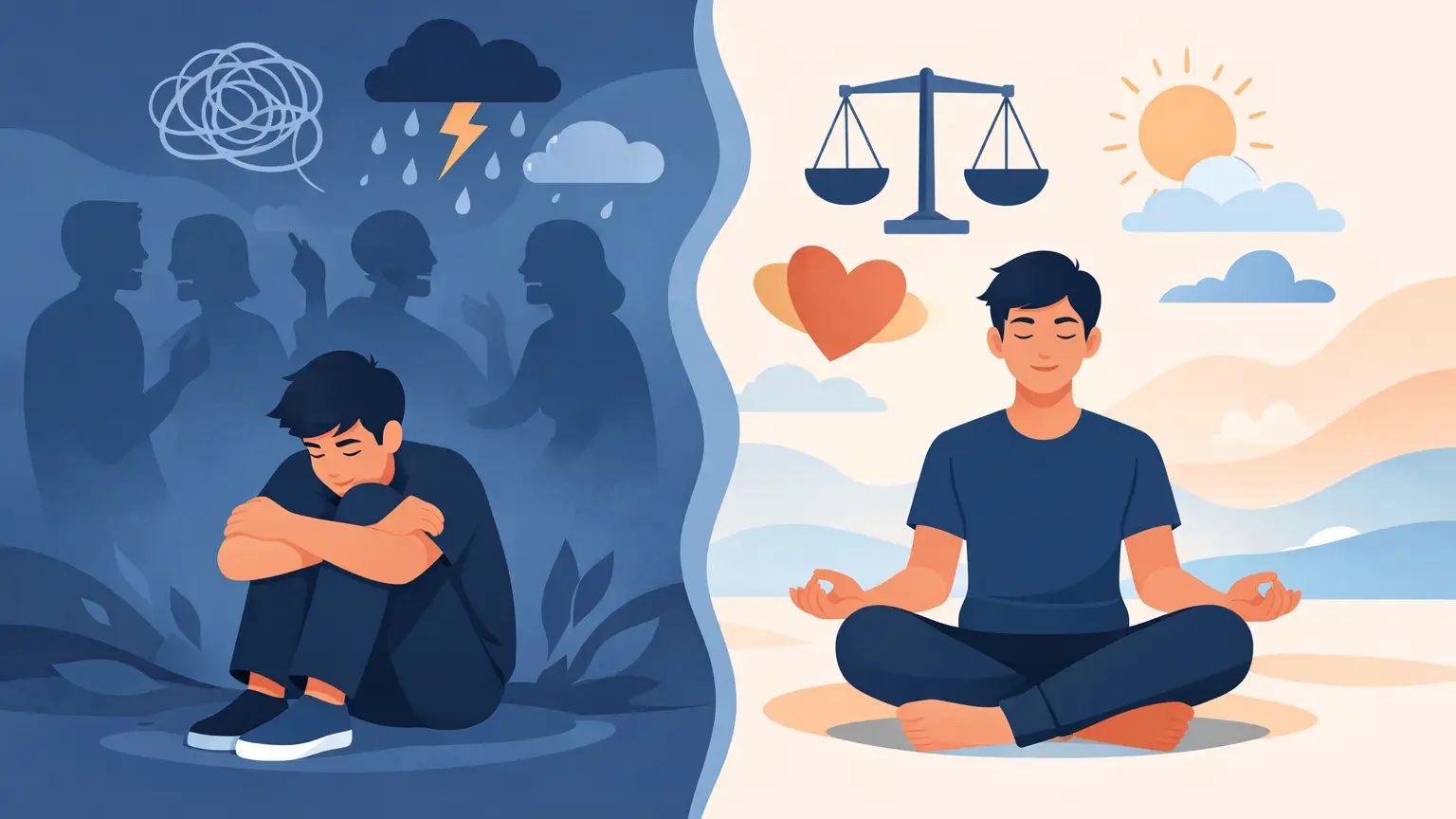
You can know exactly what you want to say and still feel your body refuse to cooperate. Your chest tightens, your thoughts speed up, and suddenly a simple conversation feels high-stakes. That is part of why social anxiety and emotional regulation are so closely connected. It is not just about shyness or overthinking. It is also about what happens in your nervous system when connection starts to feel risky.

For many high-functioning adults, social anxiety hides in plain sight. You may look composed at work, show up for other people, and keep your responsibilities moving. But internally, you might be bracing before meetings, replaying what you said after dinner with friends, or carefully managing how much of yourself feels safe to reveal. That tension can be exhausting, especially when you tell yourself you should be over it by now.

The truth is, this pattern is not a character flaw. It is often a protective strategy. And when you understand the role emotional regulation plays, change becomes more possible and less shaming.

Why social anxiety and emotional regulation affect each other

Social anxiety is often described as fear of judgment, rejection, or embarrassment. That is true, but it is only part of the picture. Underneath those fears is usually a body that has learned to interpret social situations as potentially threatening. Emotional regulation is what helps you notice that activation, stay connected to yourself, and respond in a way that is grounded rather than driven by panic or self-protection.

When emotional regulation is strained, social anxiety tends to get louder. A quick shift in someone’s tone can feel loaded. A pause in conversation can feel like proof you said the wrong thing. A group setting can create such a rush of internal activation that your mind starts scanning for danger instead of staying present.

This is why insight alone often does not fully resolve social anxiety. You may know, logically, that people are not analyzing you as harshly as you analyze yourself. But if your body is in a stress response, logic has limited reach. Regulation helps create the internal conditions where perspective can actually land.

What dysregulation can look like in social situations

Emotional dysregulation does not always look dramatic. In adults who are thoughtful, capable, and used to holding it together, it often shows up in quieter ways.

You might become hyperaware of your facial expression, your tone, or whether you are taking up too much space. You may over-explain to prevent misunderstanding, laugh when you are uncomfortable, or go blank when attention turns toward you. Some people cope by staying very agreeable. Others cope by withdrawing, canceling plans, or avoiding deeper conversations altogether.

There can also be a strong after-effect. Maybe the interaction itself seemed manageable, but later you replay every detail, criticize yourself for small moments, and feel emotionally hungover for hours. That post-social spiral is often a regulation issue as much as a thought issue. Your system is still trying to come down from perceived threat.

How these patterns develop

Social anxiety rarely appears out of nowhere. Sometimes it grows out of temperament. Some people are naturally more sensitive, more observant, or more easily overstimulated. Sometimes it is shaped by experiences such as chronic criticism, bullying, family conflict, emotional neglect, trauma, or environments where being fully yourself did not feel safe.

If you learned early that mistakes were costly, that approval had to be earned, or that other people’s reactions were unpredictable, your system may have adapted by becoming watchful. That watchfulness can look like perfectionism, people-pleasing, self-monitoring, or a constant effort to stay one step ahead of discomfort.

These adaptations make sense. They may have helped you belong, avoid conflict, or reduce risk. But over time, they can keep your body stuck in a cycle where social connection feels more threatening than nourishing.

What actually helps with emotional regulation

If you struggle with social anxiety, the goal is not to become unaffected by people. The goal is to build enough internal steadiness that social moments do not knock you so far out of yourself.

That usually starts with noticing your cues earlier. Many people only recognize anxiety once they are already flooded. Try paying attention to smaller signals such as holding your breath, clenching your jaw, speaking faster, losing access to words, or feeling a sudden urge to escape. Earlier awareness gives you more choice.

Then focus on regulation in the body, not just the mind. A few slower exhales, relaxing your hands, feeling your feet on the floor, or lengthening the pause before you respond can help communicate safety to your nervous system. These are not magic tricks. They are small ways of reducing the intensity so you can stay more present.

It also helps to lower the pressure you put on the interaction. Social anxiety often grows in environments of internal performance. Instead of asking, How am I coming across, try asking, What do I need to stay connected to myself right now? That shift matters. It moves you from self-surveillance to self-support.

Practical ways to work with social anxiety and emotional regulation

One of the most effective changes is to stop treating every social discomfort as a problem to eliminate. Sometimes regulation means staying with mild discomfort without immediately fixing, apologizing, or retreating. If you feel awkward for a moment, that does not mean the interaction went badly. If someone is quiet, it does not automatically mean disapproval.

It can also be helpful to prepare in ways that support you without turning preparation into another form of control. For example, before a meeting or event, take two minutes to settle your breathing and choose one grounding phrase such as, I do not need to perform to be okay. That is different from mentally rehearsing every possible outcome.

After social interactions, pay attention to how you debrief with yourself. If your pattern is to review every detail and search for mistakes, try a gentler check-in. Ask, What felt hard? What helped? What story am I telling myself? This kind of reflection builds awareness without feeding shame.

Your lifestyle also matters more than you might think. Sleep deprivation, chronic stress, burnout, and overstimulation can all lower your regulation capacity. In those seasons, social anxiety often feels worse because your system has less room to absorb stress. This does not mean your progress is gone. It means your nervous system needs support.

When exposure helps and when it backfires

Gradual exposure can be useful for social anxiety, but only when it is paced with care. Pushing yourself too hard, too fast can reinforce the idea that social situations are overwhelming and must be endured through force.

A more sustainable approach is to stretch without flooding. That might mean making one small comment in a meeting instead of trying to become the most outspoken person in the room. It might mean staying at a gathering 20 minutes longer than usual, or practicing more honest self-expression with one safe person before attempting it in a larger group.

Growth often looks less dramatic than people expect. It is not always confidence first. Sometimes it is trembling a little less, recovering faster, and needing less time to get back to baseline.

The role of self-compassion

Many adults with social anxiety are already trying very hard. They are reading, reflecting, showing up, and blaming themselves when change feels slow. But shame tends to make regulation harder, not easier. If part of you believes your anxiety is proof that something is wrong with you, social situations will keep carrying extra emotional weight.

Self-compassion does not mean excusing patterns that are hurting you. It means responding to them in a way that supports change. You do not need to be fixed. You need tools, context, and enough safety to practice new responses.

That is where therapeutic support, coaching, or a structured healing process can make a real difference. Sometimes the issue is not a lack of effort. It is that you have been trying to think your way out of something your nervous system is still holding.

If this work feels personal, that makes sense. Social anxiety touches identity, relationships, and the basic human need to belong. So move gently. Practice consistently. Let progress be honest instead of performative. The more you learn to regulate with yourself, the less every room has to decide your worth.

10 Emotional Regulation Examples That Help

July 22


Some people look calm in a meeting, answer texts politely, keep the house running, and still feel like they are holding back tears by 4 p.m. If that sounds familiar, emotional regulation examples can be more helpful than abstract advice. When you can see what regulation actually looks like in daily life, it becomes easier to practice without judging yourself.

Emotional regulation is not about being unfazed, endlessly positive, or perfectly composed. It is the ability to notice what you are feeling, make space for it, and choose a response that aligns with your values instead of reacting on autopilot. Sometimes that response is a deep breath. Sometimes it is a boundary. Sometimes it is stepping away before you say something you do not mean.

What emotional regulation really looks like

A lot of adults think they are bad at emotional regulation because they still get anxious, irritated, or overwhelmed. But feeling deeply is not the problem. The question is what happens next.

Regulation means you can stay connected to yourself while emotion is present. You may still feel activated, but you are not completely taken over. You are able to pause, name what is happening, and make a more intentional choice.

That can be especially hard if you learned early on to dismiss your feelings, keep the peace, or push through stress until your body forced you to stop. For many high-functioning adults, dysregulation does not always look dramatic. It can look like overexplaining, shutting down, snapping at someone you love, doomscrolling late at night, or saying yes when every part of you means no.

Emotional regulation examples in everyday life

These emotional regulation examples are not meant to be performed perfectly. Think of them as real-world patterns that build self-trust over time.

1. Pausing before replying when you feel triggered

You get an email that feels critical, or your partner says something that lands wrong. Your first impulse might be to defend yourself, explain immediately, or fire back. Regulation looks like noticing the surge in your body and waiting before responding.

That pause may be thirty seconds or thirty minutes. The point is not avoidance. It is giving your nervous system enough space so your response reflects what you actually want to say.

2. Naming the emotion instead of acting it out

Sometimes the fastest way to reduce emotional intensity is to get honest about what is happening. You might tell yourself, I am feeling embarrassed right now, or This is disappointment, not failure.

That kind of naming can interrupt the spiral. It helps the brain organize the experience instead of treating it like a vague emergency. The goal is not to label feelings perfectly. It is to create a little clarity so emotion feels more workable.

3. Taking a walk before continuing a hard conversation

When your body is flooded, insight alone may not help. A short walk, splashing cold water on your face, stretching, or stepping outside can support regulation because emotions live in the body as much as the mind.

This matters in relationships. If a conversation is escalating, taking a ten-minute break can be far healthier than pushing through while both people are activated. The trade-off is that breaks only help if you come back and re-engage. Regulation is not disappearing. It is knowing when a pause is needed.

4. Letting yourself cry without calling it weakness

For many adults, especially those used to carrying a lot, crying brings shame almost as quickly as relief. Emotional regulation can look like allowing tears without layering criticism on top.

Crying is not always a sign that you are falling apart. Sometimes it is a sign that your system is releasing something it has held for too long. If you can let the feeling move through without turning it into a character judgment, that is regulation.

5. Choosing not to solve everything while upset

When stress spikes, many people go straight into fixing mode. They make plans, overanalyze, rewrite messages, or try to force certainty. It makes sense. Problem-solving can feel safer than vulnerability.

But not every feeling needs an immediate solution. One of the healthiest emotional regulation examples is saying, I am too activated to think clearly right now. I can revisit this later. That choice protects you from decisions made in panic.

Emotional regulation examples at work and at home

Regulation often matters most in the places where you carry the most responsibility.

6. Setting a limit before resentment builds

You agree to one more task, one more favor, one more late-night call, and then feel your patience evaporate. In this case, emotional regulation is not just calming yourself down after the fact. It is noticing the early signs of overload and setting a limit sooner.

That might sound like, I cannot take that on this week, or I need some quiet time before I can talk about this well. Boundaries are often a regulation tool, not just a relationship skill. They reduce the pressure that keeps tipping your system into overwhelm.

7. Lowering the intensity of your self-talk after a mistake

You forget something important, miss a deadline, or say the wrong thing. Your inner critic jumps in fast. Regulation means catching that voice before it becomes the loudest one in the room.

You do not have to swing to forced positivity. A more grounded response might be, I do not like this, but I can repair it, or This was a mistake, not proof that I am incompetent. Self-compassion is not letting yourself off the hook. It is creating enough internal safety to respond constructively.

8. Recognizing when you are numb, not fine

Not all dysregulation looks emotional. Sometimes it looks flat. You may feel disconnected, checked out, unusually tired, or unable to care about things that normally matter to you.

Regulation in those moments may be very simple. Eat something nourishing. Put your phone down. Sit in silence for five minutes. Text someone safe. Rest before asking yourself to perform. If you are used to overriding your needs, this can feel unfamiliar, but it is still a meaningful form of responsiveness.

9. Repairing after a reactive moment

Even with practice, you will still have moments when you raise your voice, shut down, or send the text too quickly. Emotional regulation is not the absence of rupture. It is what you do after.

Repair might mean saying, I was overwhelmed and I did not handle that well. I want to try again. It might mean taking responsibility without collapsing into shame. This matters because self-trust is built not by never struggling, but by learning that you can return, repair, and move forward.

10. Creating small routines that support your nervous system

Some of the strongest emotional regulation examples happen long before a stressful moment arrives. Going to bed earlier, leaving more space between meetings, eating regularly, getting sunlight, journaling, or having a transition ritual after work can all make regulation more accessible.

These habits are not glamorous, and they are not one-size-fits-all. But they do matter. A nervous system that is chronically depleted has a harder time tolerating frustration, uncertainty, and emotional strain. Caring for your baseline is part of emotional health, not a side note.

Why regulation can feel hard even when you know better

Insight does not automatically create change. You can understand your patterns and still find yourself repeating them when stress hits. That is not failure. It is usually a sign that your protective responses are well-practiced.

If you learned to people-please to stay connected, shut down to stay safe, or overfunction to avoid criticism, those patterns may still activate before your thoughtful mind has time to intervene. This is why emotional regulation work needs both compassion and repetition. You do not need to shame yourself into changing faster.

It also helps to remember that regulation is not the same as suppression. If you only focus on looking calm, your body may still be carrying the full weight of what you never let yourself process. Real regulation includes honesty. It allows emotion to exist without handing it total control.

How to practice without overwhelming yourself

Start small enough that your nervous system can actually cooperate. Pick one pattern you want to interrupt. Maybe it is reacting too quickly, abandoning your needs, or spiraling after minor mistakes. Then choose one response you can practice consistently.

You might put a hand on your chest before replying to a difficult message. You might ask yourself, What am I feeling, and what do I need right now? You might commit to taking ten minutes before saying yes to requests. The best tools are often the ones simple enough to use when you are stressed.

If you want more support, working with a therapist or a therapy-informed coach can help you understand not just what to do, but why certain moments feel so charged. Amber Bersi MFT approaches this work with both emotional depth and practical structure, which can be especially helpful if you are tired of advice that sounds good but does not translate into real life.

The quiet truth is that emotional regulation is not about becoming less human. It is about becoming more steady in your own experience, so your feelings no longer run the whole show and you no longer have to fear them.